A dog called Barry.
The story behind a pet wellness brand I still love, a St Bernard who saved dozens of lives in the Alps, and a decision founders find hard: putting a business to sleep instead of killing it.
The dog
In the early 1800s, a St Bernard called Barry worked with the monks at the hospice on the Great St Bernard Pass, high in the Alps between Switzerland and Italy. Travellers crossing the pass regularly got lost in snowstorms. Barry found them. The usual figure is that he saved around forty lives. Some accounts say more.
The legend of how he died is the part that stayed with me. He found a soldier, one of Napoleon's, half frozen in the snow, and licked his face to wake him. The soldier came round to see an enormous animal standing over him, took it for a wolf or a bear, and killed it with his bayonet. When he realised what he'd done, he carried the dog down the mountain to the nearest village.
Historians will tell you the real Barry most likely died of old age in Bern, where he was preserved and can still be seen in the Natural History Museum. But the legend is the version people tell, and it's the version that made me want to build something.
Ever since, the best dog at the hospice has been called Barry. There's a monument to him near Paris. Disney made a film about him. He's the reason every cartoon St Bernard has a little barrel around its neck.
The brand
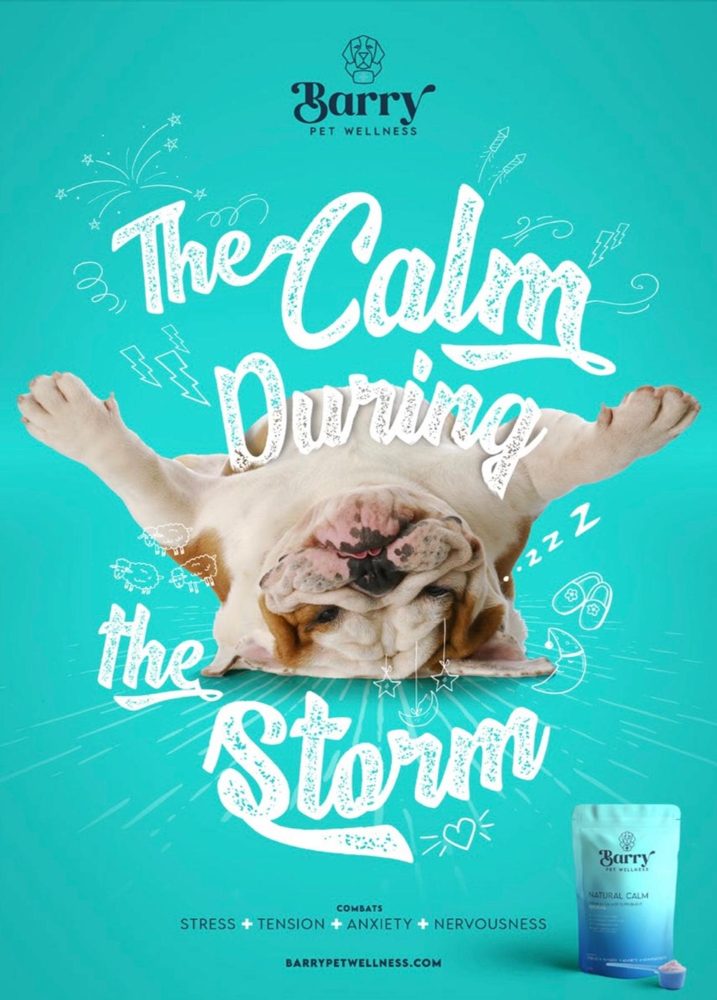
Barry Pet Wellness came straight out of that story. Calm during the storm. Supplements for anxious dogs, built with the same care we put into products for their owners, and a brand with a real story at its heart instead of a stock photo of a golden retriever.
I loved building it. The design was joyful, the products were good, and dog owners got it immediately. If you've ever had a dog shaking under the table during fireworks, you understand the brief.
Why it didn't get where I wanted
Pet wellness is a crowded and expensive category to win customers in. The big players spend heavily, and getting a new brand in front of the right owners at the right moment costs more than most founders expect.
At the same time I had HIRO growing, OTO to run and Ecommerce & Co to build. Something had to give. I could have kept Barry limping along, half-funded and half-attended. Instead I made a decision founders often find hard: I put it to sleep rather than killing it.
The site is live. The trademark is held. The brand and the story are intact. It's dormant, not dead.
Dormant or dead: how to tell the difference
I've now had both. Fountain was dead. There was no coming back from a recall and backers who'd walked away. Barry is asleep. They felt completely different, and they needed completely different decisions.
- Is the problem the business, or your capacity? If the product, the brand and the customers are sound, and the issue is your time or the cost of acquiring customers right now, pausing can be the right call.
- What does it cost to keep it alive? Domain, trademark renewals, stock that might expire, a website that needs updating. Keep the cost of dormancy low and known.
- Write down what would make you restart. A partner, a channel, a funding route, a change in your own time. Without that list, dormant quietly turns into dead.
- Protect the story. Brands built on a real story survive being paused. Brands built on a trend usually don't.
- Be honest with yourself. Calling something dormant to avoid the feeling of failure helps nobody. If it's over, close it properly.
I still think about Barry, the dog and the brand. One day, maybe.
Let's talk.
Tell me where you are and what's on your mind. Book a call, or email me if that's easier.
- You book a time or send me an email.I read and reply to enquiries personally, usually within a day.
- We talk for 30 minutes.You tell me what you're working on and what you need.
- I tell you straight whether I can help.If I can't, I'll point you to someone who can.