Field Notes: DTC Live.
What I heard, who I met and what I'm changing in my own business after a day at the UK's big ecommerce conference.
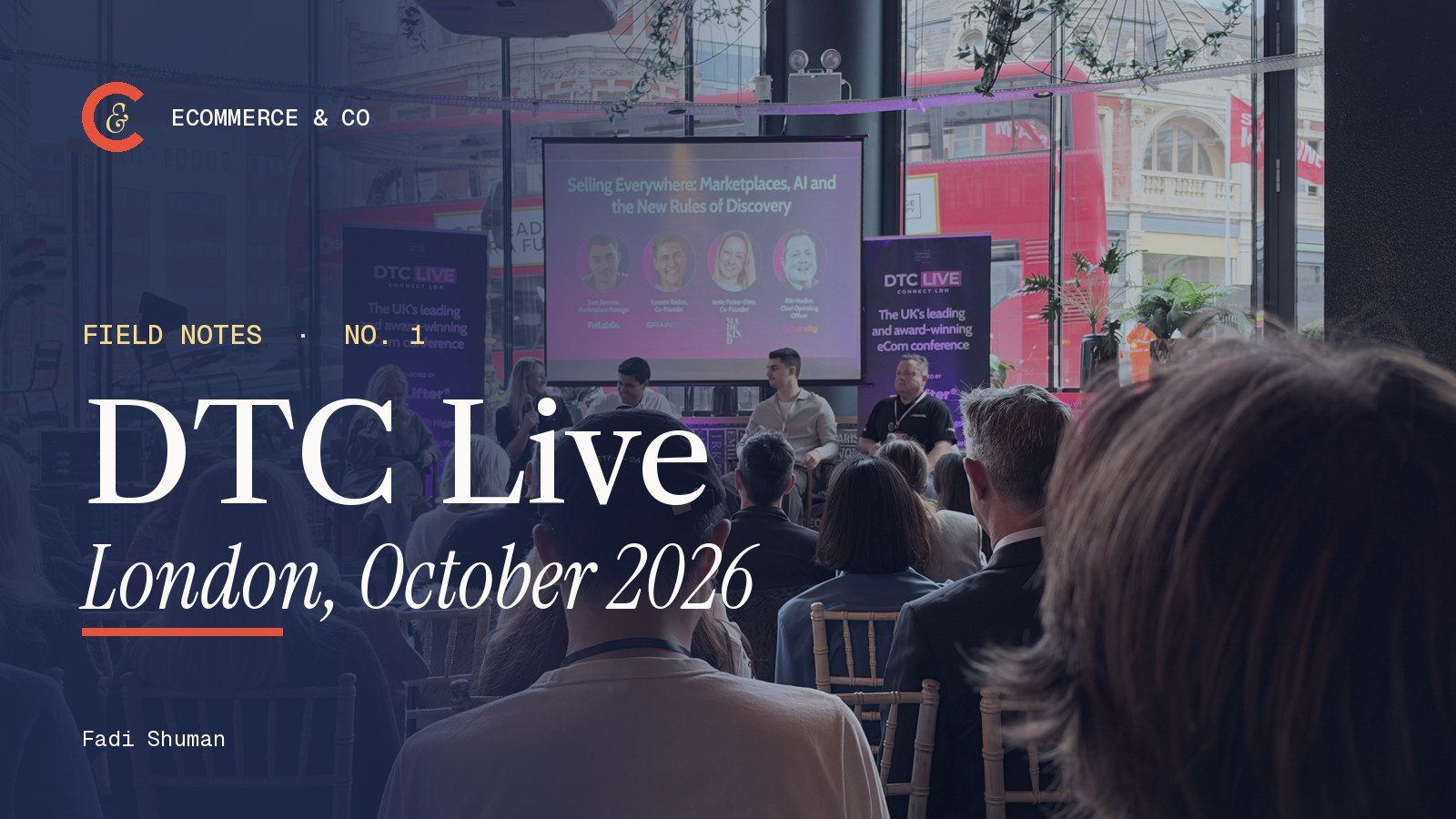
I spent the day at DTC Live, the London ecommerce conference, and the best part was simply being in the room. Talking to other founders face to face is a different thing from reading about them.
My main takeaway came from the hallway, before any of the talks. There are a lot of founders and solopreneurs out there now, and noticeably more women among them. The barriers to starting have dropped. Technology used to be one, and money was another. Now you can use AI agents to set up a shop with almost no technical knowledge, and get them to help with your marketing. It is harder than that sounds, but the bar is much lower than it was.
The people
A few of the founders I met:
- A founder making cleaning products inspired by her mum, who is a cleaner.
- A barrister who has launched a skin rejuvenation product alongside her legal career.
- A founder from Glasgow who built a big Amazon business in gardening tools, watched it explode during COVID, lost it, and started again. He now runs a group of supplement stores and brands, Brookline Group, including SupplementHQ, CreatineHQ, Pure Nur and Collea.
- A very unassuming man from Keter, the garden storage and shed brand, who mentioned in passing that they do around $100 million a year on Amazon alone. That is before the rest of the business.
Every one of them had a story worth a podcast episode.
Your site is probably slower and less trusted than you think
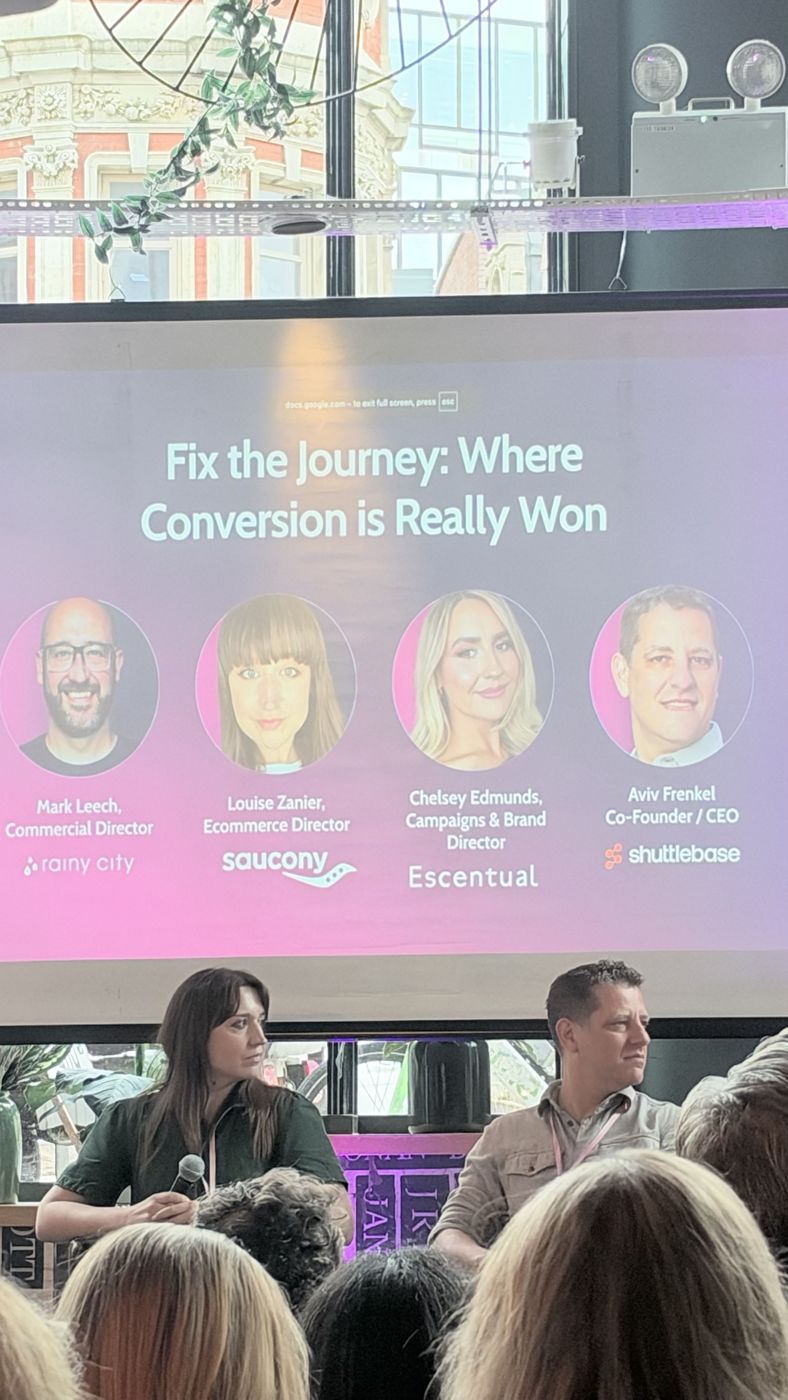
I had a good chat with Mark from Rainy City, a Shopify agency in Manchester. Two points stuck.
Speed first. Almost everyone's site looks fast on paper, because Google counts a page as good if its main content loads within 2.5 seconds. That is a pass mark, and it is still slow for a shopper on a phone. Watch what your speed score is really telling you.
Then trust. Across the roughly 2,000 stores Rainy City works with, about a third have a trust problem: missing or weak badges, payment issues, or a site that simply doesn't look legitimate.
- 2.5s Google's "good" load time
- ~2,000 stores Rainy City works with
- 34% have a trust issue
They also had a QR code on the slides for a free audit of your site. Worth scanning if you see it.
Make money on the first order
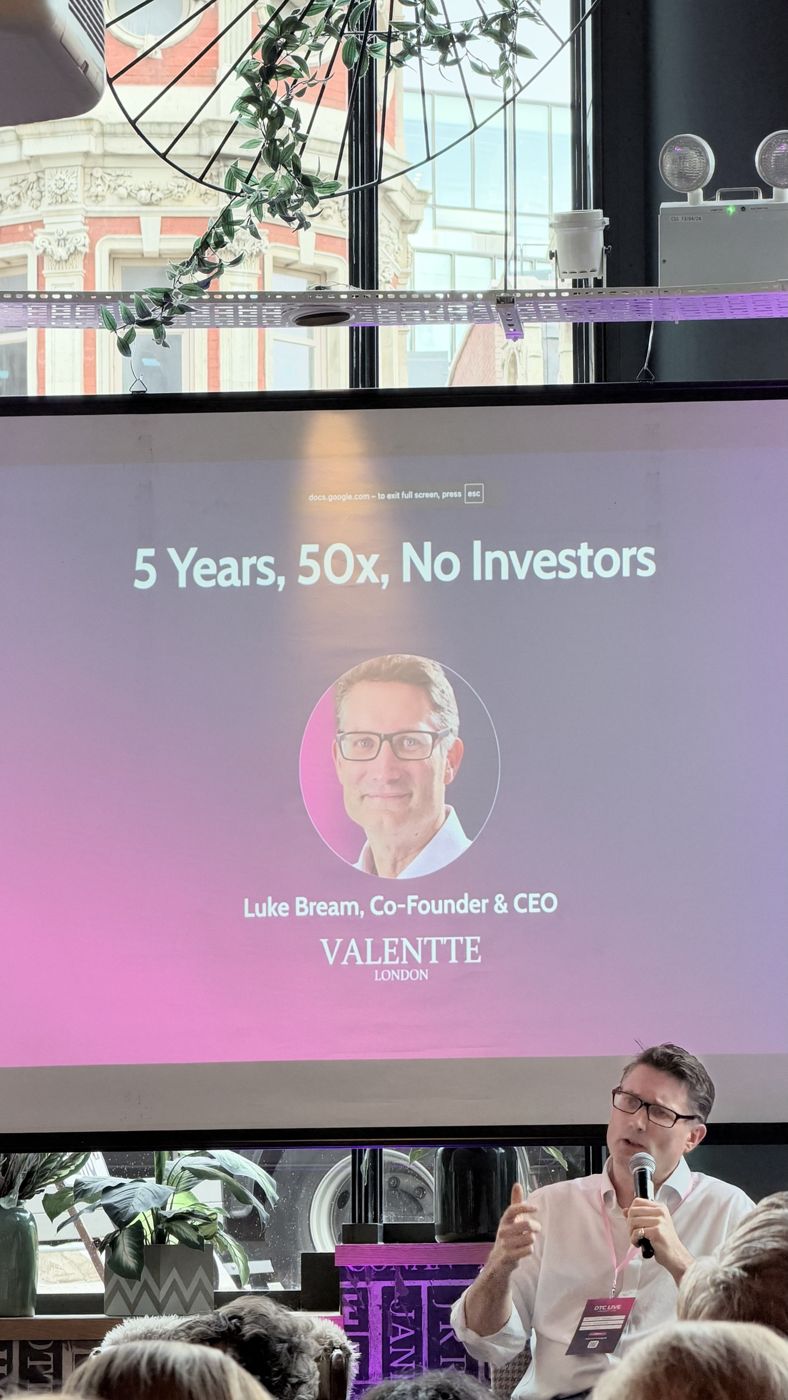
Valentte makes home fragrance: diffusers, candles and the like. Luke has been at it a long time, and the business took off again through lockdown. He was refreshingly open about the mistakes.
He recommended one book that changed the business: $100M Offers by Alex Hormozi. After reading it, his team came back with a genuinely irresistible offer, and within a week they were taking about £200,000 more a week. Then a new problem arrived. The business grew faster than the team and operations could keep up with.
The part I found most useful was on blended customer acquisition cost. His numbers looked like this:
- £2 to win a returning customer
- £18 to win a new customer
- ~£12 blended average
At £12 blended, the obvious move was to throw more money at ads. It turned out every new customer was losing them money, and the blend hid it. His rule now is to make money on the first order. In practice that means building the first offer around a bigger bundle with a proper discount, so the order value covers what it cost to win the customer. All fundamentals, and he was a very good speaker too.
What I'm changing. This one hit home. Our HIRO triple pack doesn't carry enough value, and once you add fulfilment it costs us to deliver. Before we go back on Meta, I want a four or five pack as the lead offer, with a bigger discount on it, so the average order lands around £30 and we make money on the first order.
Precovery: the offer before the exit
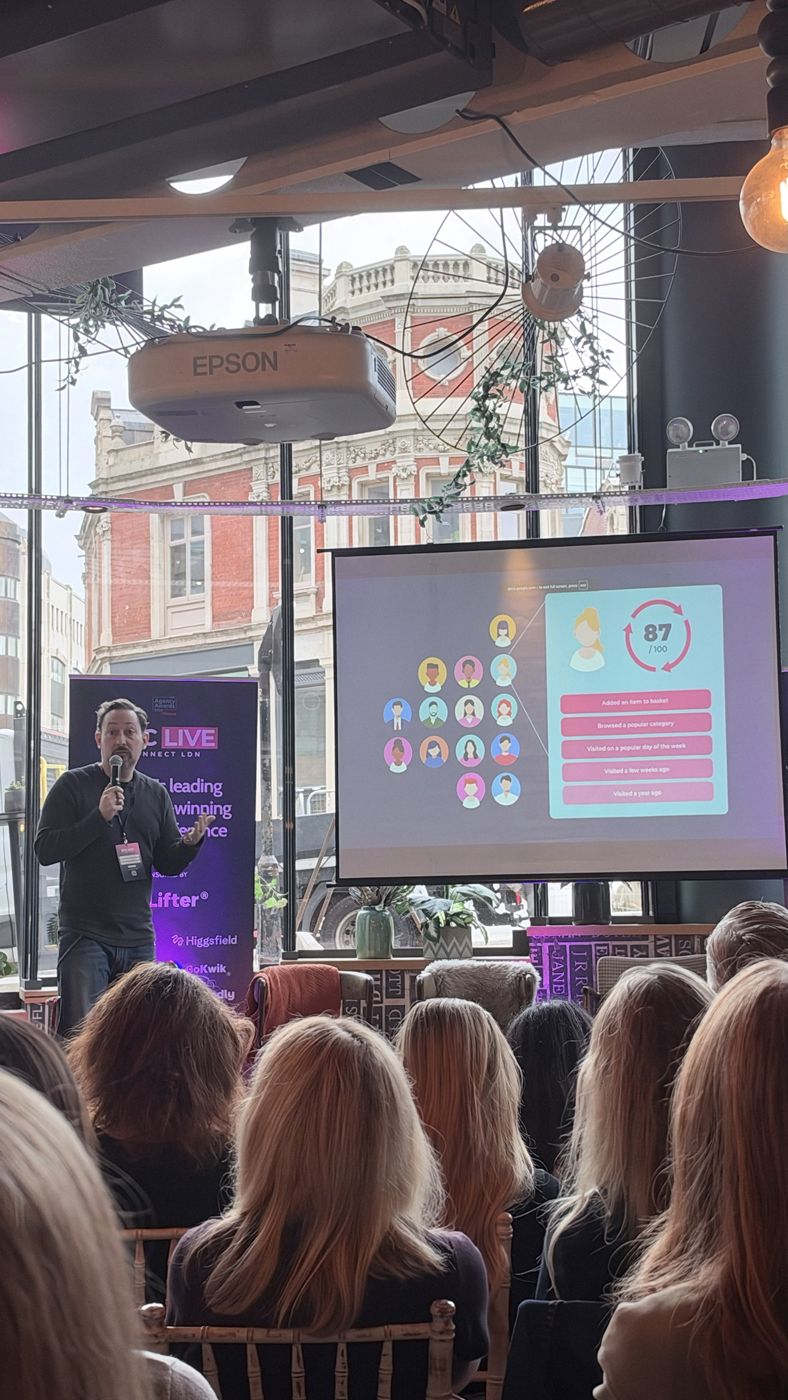
One of my favourite sessions. RevLifter has a tool that reads how each visitor is behaving and predicts whether they will buy. If it thinks they won't, it works out what kind of offer would change that and shows it while they are still browsing. It is not an exit pop-up and it doesn't need an abandoned basket or an email address. They call it precovery, a name they made up, and I like it.
The clever bit is how they prove it. For the first month the tool makes its predictions without showing any offers. At the end you can see how many people it flagged as non-buyers, and whether they did in fact leave without buying. Smaller sites without enough traffic can lean on lookalike data from RevLifter's wider network. It also means full-price buyers never see a discount they didn't need.
Abandoned baskets belong on WhatsApp
WhatsApp came up all day. The speaker from GoKwik made the simplest case for it: what is the first thing you check in the morning? Your WhatsApp messages, well before your email. That is where people's attention is, so that is where basket recovery messages should go.
On Black Friday. His view is that Black Friday is decided by engagement and awareness, and that the discount is the least interesting part of it.
For my own Black Friday this makes much more sense than another abandoned basket email. We have around 7,000 customers who have opted in to texts, and I'm going to ask GoKwik whether that lets us reach them on WhatsApp too.
One person, the output of fifty
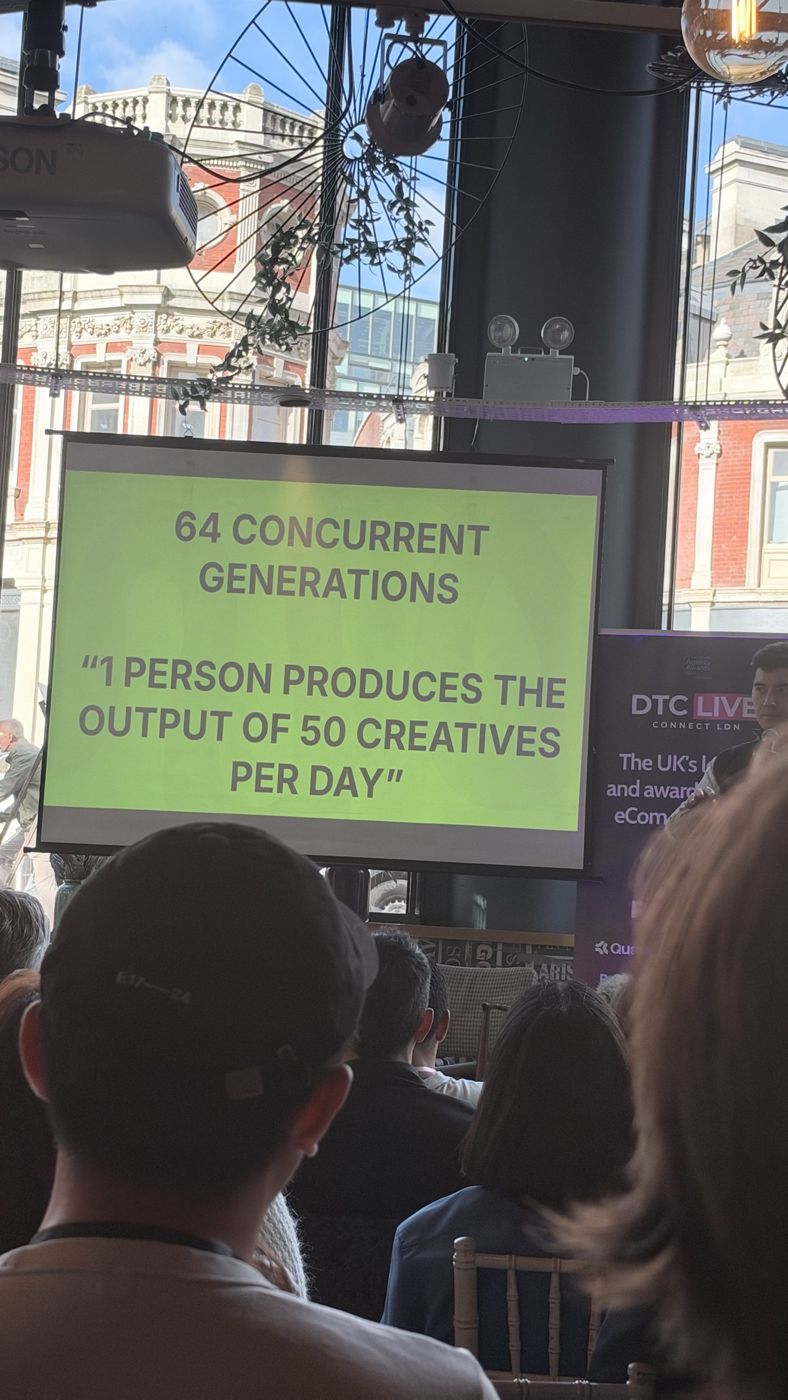
The afternoon had a lot of AI video. Higgsfield showed how fast you can now produce polished creative: 64 generations running at once, and one person producing what used to take fifty creatives a day.
I came in confused about how the tools fit together, so for anyone else in the same place: Higgsfield is a studio platform that gives you lots of image and video models in one place. Seedance is one of those models, a video generator built by ByteDance, the company behind TikTok. ElevenLabs is separate again and does voice and audio.
Their line for next year was that 2027 is the year of the creative. I agree, with one caution about the look. Very polished content now reads as AI, and that is the last thing my customers want. The irony is that I will probably end up using AI to make deliberately rough videos.
Where I will use these tools is product imagery on our own site. I want HIRO to feel more human, with real people holding the product, squeezing the fruit, showing the energy, including on the image rollover. That is worth spending money on. For ads, probably not.
The cringier the better
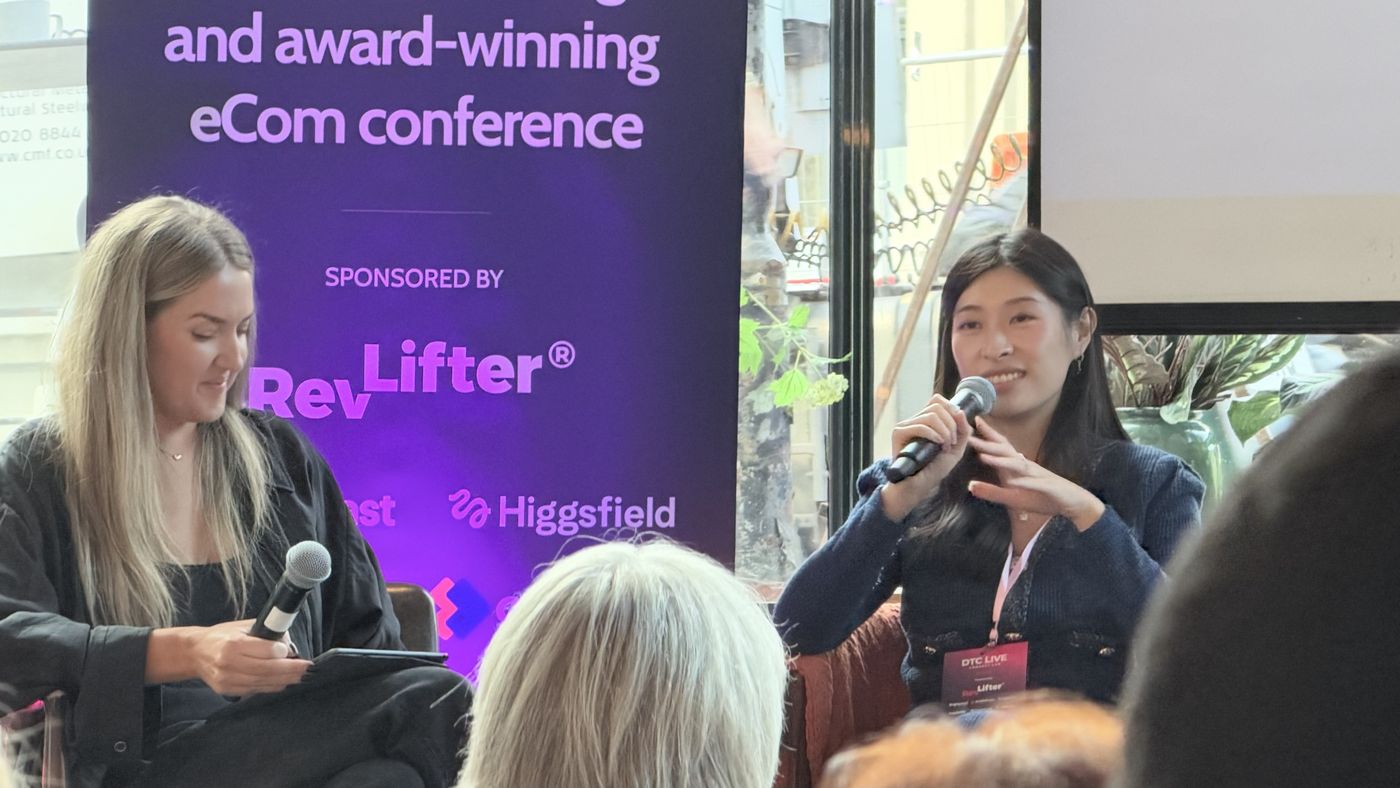
Jude is a bladder health brand for women, a subject most brands won't touch. Peony grew up in a family that worked in personal care, saw how little innovation there was in the category, and decided to do something about it. Jude has raised money and is now on the shelves in Boots. It took some nerve to stand up and talk about it, and she was great.
She talked about doing whatever it takes to get attention on a taboo subject, including, she said, wearing a nappy in one of their Instagram posts. Another founder told a similar story: she put a random photo of her son on the company Instagram, and it blew up because everyone wanted to know why it was there. Her team now posts deliberately odd, accidental-looking photos every week. Her view was the cringier the better.
Overall
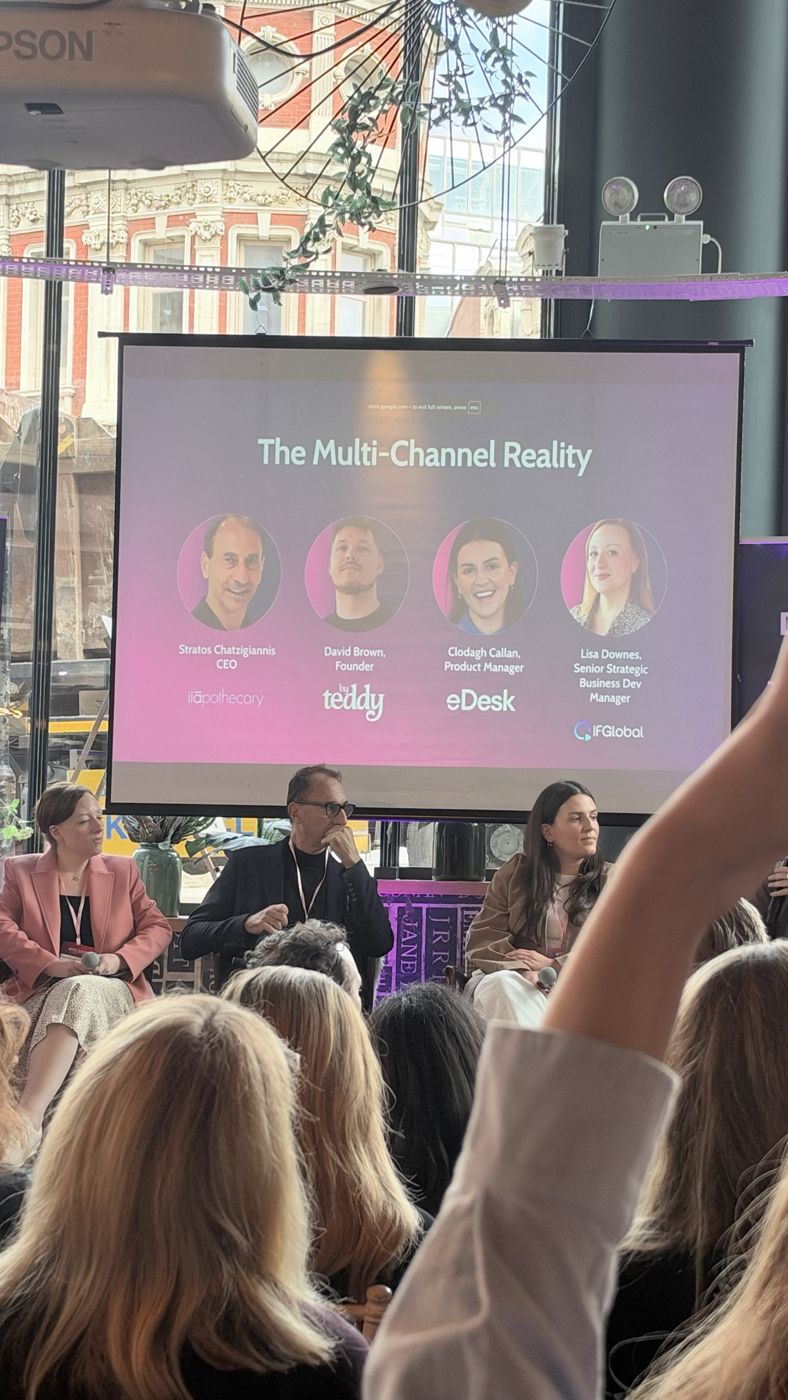
A really good day. Nice venue, decent lunch and good people. The talks that stood out were the ones about fundamentals: price an offer so the first order makes money, make the site fast and trustworthy, and meet customers where they actually look.
It also reminded me that I should be going to a lot more of these. Thanks to the DTC Live team. See you at the next one.
Let's talk.
Tell me where you are and what's on your mind. Book a call, or email me if that's easier.
- You book a time or send me an email.I read and reply to enquiries personally, usually within a day.
- We talk for 30 minutes.You tell me what you're working on and what you need.
- I tell you straight whether I can help.If I can't, I'll point you to someone who can.